Category: Podcast

  • Gift Guide and Mail Bag

    Gift Guide and Mail Bag

    Listen

    Notes

    Gift Guide

    Vacation Planning Workshop

    Transcript

    Welcome to episode seven of the Raising Citizens podcast. We are here in mid December at the end of 2024. I, made a classic nearing 40 mistake, which is that I had my plan for all of the episodes for December, and in my mind it was so clear that I didn’t write it down, because like, obviously this is what we were going to be doing, but the problem was I didn’t write it down.

    And so I could not remember what I was supposed to sit down and record today. So I asked on Instagram for some suggestions and I got a couple. We’re going to be addressing those, and In those suggestions though, you reminded me what my original plan was. So, we’ll talk about that as well. We’ve got a hodgepodge mail bag for you today.

    Read the full transcript

    So, one of the suggestions was a gift guide, which we are going to do, and that reminded me that , my plan was to actually talk about what to do if you would like to gift an experience instead of stuff. And what we did last year and how I think it worked. And so we will talk about that. And then, uh, another question from the mailbag was this person would like me to talk about Luigi Mangione, which I don’t really want to do, but we give the people what they want.

    And I do have some thoughts about that. So that’s what we’re going to be talking about today. On the podcast.

    So let’s start off with the gift guide. , and we’re going to start off with the original idea, which is what to do. If you would like to gift experiences. I know that lots of people. Myself included, we have so much stuff that the kids end up just like not even playing with, right? So you don’t really want to spend that much money on getting more and more and more stuff because it gets to the point where once you have so much stuff, they can’t even find anything to play with and so they play with it less than if you just had like one toy.

    They would go back to that toy every time. So you want to use your money on experiences, but you still want to have the magic of Christmas morning. So here is what we did last year, and I think it worked out pretty well. We hit a bunch of points in some, like, airline credits that were about to expire, and so we decided that we were going to take the kids on a cruise for April vacation. And then we decided, like, let’s give, let’s tell the kids at Christmas that that’s, that’s what we’re doing.

    So our kids had been obsessed with The Amazing Race leading up until Christmas. So what we did was, I hid amazing race envelopes under the couch cushions. And so I gave them, we gave them, you know, Santa came, gave those gifts. And then there were a few gifts from us. And then once they thought that they were all done opening gifts, we had them pull these envelopes out from underneath the couch cushions and they had these challenges.

    So actually they just pulled out the first one and, um, They did the challenge, and then once they did the challenge, they got the next envelope, kind of like they do in the show. And inside that envelope was the first puzzle piece, and then the challenge to get the next puzzle piece. So in the end, they had four puzzle pieces.

    The first puzzle piece said in April we are going to, and then the second one was a code that once you decoded it said on a cruise. The third piece said two. And then the fourth puzzle piece had, a map on it with the little location do hickeys for each of the places where we were going.

    So the challenges that we did, I built these just in Canva, , and I bought the. envelopes on Amazon. I’ll put the link up on the website. But the challenges that we did, , we had given them two puzzles. So we told them to choose the puzzle with the fewest pieces and then once the correct puzzle is built, you will receive your next clue.

    One tip there is, uh, don’t pick a 500 piece puzzle. That’s, definitely don’t do that because they needed to, you know, part of the thing was they needed to do it independently. So I think the puzzle actually was only like a hundred pieces. It wasn’t 500. There’s maybe like a hundred pieces. That was bordering on too much for kids who stayed up late and got up very, very early.

    So maybe pick a 50 piece puzzle. Might be a better idea if you wanted to do that. And then the next one was like a pick one. So we did seek or sing. So either there was like a, there was like a whole bunch of face down cards, kind of like the episode with Kim and Penn, from the Holderness family where they had to like flip over all the rocks.

    So, it would be like that, where like, you could flip over three of the cards at a time and it was all over the table. And then once you got the, special pieces and you got all of those, then you could go, then you could turn it in for your next clue. Or you could

    do a karaoke challenge with Christmas carols. the next one was use your new nonfiction books. So I got them two nonfiction books. So one of them I got like ancient civilizations and the other one I got like oceans because We were going to Mexico on the screws and so we were going to go see some ancient civilization type things and we were probably going to do like a little bit of snorkeling type stuff so those both related they didn’t know when they opened them they’re just like oh cool.

    And so that was how they broke the code, so they had to find sentences, I had copied sentences from the book, but replaced one word from that sentence, with like a blank with the code underneath it, and then, I don’t know, maybe they each had three from their book or something that they had to find the sentence and write down the word.

    And then they could use that word to fill in, like, the cipher thing, the, the list of all the letters. And they could fill that in and then go, then once they had that, they could use that to figure out what that puzzle piece said. And then the last one was, pie and pirouette or partnered pencil. So they could either do, like, a directed drawing.

    together or, learn and perform a short segment of, , the Nutcracker. I just like found a YouTube video that had the Nutcracker on it. I think they ended up choosing that one. Yeah, so it was really fun. It lasted like well over an hour. And they were super excited once they actually figured out they were like, wait, what we’re, what, what, um, so, and they have been asking me to do it again.

    I don’t know if we are doing it again because we’re not going on a cruise in April. So, um, Yeah, I don’t know if we’re doing that, but, um, it was really fun. I would strongly recommend it.

    So the challenge is just like, while you’re designing it, just making sure that it’s like going to be at the nexus of challenge and ability, like you want it to be challenging, you don’t want them to fly through it, but also you don’t want it to be well over frustration level. That was a little bit tricky, but we, you know, you can always give an appropriate amount of clues if necessary in the morning if we are feeling a little less than gritty on all of the Christmas cookie sugar rush, adrenaline rush stuff.

    , but yeah, that’s a fun way to reveal an experience gift so it still has like that fun and excitement of opening something on Christmas morning, even though you’re not doing it for another month or two or four. And you could do it for anything, right? Like it doesn’t need to be a cruise or some like big crazy week long vacation.

    It could be tickets to something. It could be, a class or something like that. It could be something else that they’re not going to receive, you know, an intangible thing that they’re not going to receive on that day. Anything like that could work for sure.

    And of course, the nice thing is that hypothetically, you could finish creating these clues at 11 o’clock on Christmas Eve and still have it ready for the next day, as long as you have a printer. Hypothetically, who would do that?

    Alright, the next segment is going to be my gift guide, which I will talk a little bit about, but then I’ll actually put the links on the website, and I’ll put the website in the show notes. So, if you are looking for things that they can use that day, this was some of the challenge that I’ve been going through over the last couple days is just having things that they can play with, especially when it is getting so dark out, so early, and there is so much time to fill between the time they get off the bus and then 20 minutes later when the sun goes down and then bedtime doesn’t happen for many, many hours.

    So what can we do to raise citizens and to build the social studies understanding while still creating some fun on Christmas morning? I mean, could you get them a textbook? You could. You don’t have to. So here are some ideas. Uh, one would be books. I love getting books on Christmas. You know, this would depend on where your reader is.

    But there are a bunch of different ideas and areas you could go with this. You could do some historical fiction type books. So a couple of recommendations are One Crazy Summer. and that’s about fourth ish, fifth ish grade. And Inside Out and Back Again, which is about I don’t know. 4th through 6th grade.

    Inside Out and Back Again is a novel written in poetry about a girl who grows up in Vietnam during the Vietnam War and then moves to the U. S. One Crazy Summer is about three girls who go to Oakland, California in the summer of 1968. Really good.

    For younger readers, you might like the I Survived series. There’s a whole bunch of them. I survived World War II, I survived Hurricane Katrina. There’s a whole bunch of them. I still like the American Girls series. They’re still, you know, you can still sometimes get them in the box.

    It’s a really nice gift. The American Girl series is another one. Puzzles is the next idea. So if your kiddo likes puzzles or you think that they could like puzzles, there’s a lot of different ways you can go with this. I mean, you could get them like a superhero or princess type puzzle, but if they like the puzzle more than they like the character, then you could kind of expand it.

    To something that would build a little bit of background knowledge. So either like a landscape of a place that they haven’t been before or national parks or a country that they haven’t been to before or the maps, the map one that we used for that amazing race challenge. There’s a whole bunch of different puzzles, of course, that you could use for that.

    And of course, there’s varying levels of challenge there. You could do 50 piece puzzles. You could do 2000 piece puzzles, depending on the age of your kid

    I’m also I’m trying to keep these as last minute gift guides since we are on the 17th or 18th right now. So, , a lot of these you would be able to find on Amazon, but hopefully you would be able to find them in a physical store like Barnes and Noble or Target or something like that.

    On that note, the Week Junior is another one that you could use as a gift. You could go into store, buy one copy of the, you know, the current copy of the Week Junior. Give that as the gift, but then sign up for the subscription online and then that would come a little bit later, but they have something to open and then like the rest of the gift would be coming later.

    And that would work for other magazines as well, like National Geographic Kids or National Geographic if they’re a little bit older. Or Highlights, we love Highlights, or Ranger Rick, or any of those kinds of kids magazines.

    Sticker books are another one. Again, if your kids don’t really care about the princesses or the superheroes that come in the sticker books, they just like the stickers. Or they’re interested in flags. There are a lot of geography sticker books out there. So like flags, flags of the world, states and capitals, continents, countries, all that sort of thing.

    So sticker books is another one that you could just twist to a geography, cultural, um, um,

    And then the last one would be logic books. So like puzzles and games and thinking, like critical thinking is , one of those big pillars. And of course it does kind of lend to STEM also, but this is a little bit more like reasoning and logic, which is a little bit more on the social study side.

    There’s a lot of logic books out there that you can get as workbooks. So if your kids really like the games. on the phone that are like putting puzzle pieces together, sort of like a Tetris type thing. You could get a paper version of that in a logic book, could practice some of those skills. I mean, depends on which one you get.

    Some look more like school workbooks and some look more like puzzles. And fun things to do. So that’s part of the decision to make it more fun versus more like boring work. , and then you also could choose to add like a sticker chart to it or something like that so that it becomes more of like that gamified ed.

    Thing that happens on the games on the phone that they they could use on paper So just a couple of ideas if you are scrambling at the last minute to add to your sports and Lego and Apparently skincare is a big one Sephora haul for the for the gifts this year.

    All right, and because you asked me, even if it was that you were trolling me, I will talk about Luigi Mangione today. So if you’re listening and you don’t remember who that is, that is the person who is arrested and suspected of being the one to euphemism, take out the UnitedHealthcare CEO in New York a couple weeks ago.

    Here’s what I will say about it from a social studies perspective. A lot of the standards have this idea of the student will be able to ask and answer questions. I am comfortable in the, asking questions. There are so many details that we don’t know yet that I don’t think we can answer a lot of those questions yet.

    But I do think that it prompts a lot of questions that sit in themes five and six of the social study standards. So, theme five is individuals, groups, and institutions. And theme six is power, authority, and governance. So we have not talked about this with our six and nine year old. I have some hesitations about discussing this particular incident with My six year old and nine year old, I think the response to it has been varied, and there’s a lot of gray area in there on how people are responding, and I’m not sure that for a six and nine year old on this action that for them should be a pretty black and white moral issue, like the actual crime that he is suspected of.

    Should be pretty black and white, but from an adult’s perspective, there are some areas where people are seeing gray area there, and I’m not sure that they I’m not sure I’ve exposed them to all of the different factors there, and if I should, if it’s developmentally appropriate to introduce all of those other factors in order for them to not just be completely confused, if that makes sense.

    Like, if they were in high school, for sure, like, they can understand that, but definitely not 6 and 9, I think, is really pushing it. Also, it’s the holidays, and that’s a pretty big conversational lift, and I just, uh, we don’t have it in us, so we’re probably just not gonna bring it up, and yes. But some background understanding and some interesting questions that I think this brings up is one standard, is identify and analyze the impact of tensions between and among individuals, groups, and institutions.

    Identify and analyze the impact of tensions between and among individuals, groups, and institutions.

    In the same area is the idea that institutions are created to respond to changing individual and group needs. So I think you could, I think there’s a lot there to discuss in regards to this topic. So the institution being healthcare. And the individuals being the suspect, Luigi, and then also, you know, all of the other people who are responding to this.

    I don’t know if you’ve seen, but like on Twitter and other places, it’s prompting people to rehash their individual grievances with the healthcare system. So if institutions are supposed to be created to respond to individual and group needs, Do we think that this is just a failing institution? Do we think that this is the space before a new institution is created?

    What else impacts The creation and maintenance of institutions. All of those things are kind of interesting ideas to explore. And then the tensions between individuals, groups, and institutions. I mean, a lot of people have a lot of tension directed at this particular institution, and then there are groups of people in particular, cancer in particular, heart attack in particular.

    People who have given childbirth, like, there’s, like, a lot of groups that you could look at who have had very similar experiences with this institution, and so

    I think there’s been a lot of projection of those things onto this particular suspect and that’s why I’m not comfortable talking about, like, the conclusions that we’re going to come to here because I don’t actually, we don’t actually know whether or not, the reasons that everybody else is projecting are the reasons why he did it, but, um, it has certainly brought out the tension between the individuals, the groups, and the institution.

    That’s for darn sure. And then in strand six, power, authority, and governance, I think the interesting one to look at is analyze and evaluate the conditions, actions, and motivations that contribute to conflict and cooperation between groups and nations. Obviously in this one, we’re talking more about groups than nations. But what are the things that are contributing to this conflict? Is this a one time thing or will it be something that is not a one time thing?

    And what are the conditions that are creating this conflict? What are the motivations of the different people within the group? So, you know, what creates conflict? Similarly, there’s two different strands here within this theme, but one of the other, uh, standards in here is the ways in which government meet the needs and wants of citizens manage conflict and establish order and security.

    Now, it would actually be interesting to walk through with kids the history of trying to manage this particular conflict and how we have handled it. So going back to like Medicare. Medicaid creation, and, you know, walking through the history of that, and then Obamacare, and the Affordable Care Act, and the fact that that is actually the same thing, and what happened before that, and the change that that created, and how government has tried to respond to this, and then what are the remaining needs that exist here.

    And then, of course, people rush to compare. They love to go to that Global Connections one and talk about how different nations respond to this in different ways, right? There’s all kinds of other countries that have universal health care. How does that work? How does that not work? How does that compare to the motivations here in the U.

    S.? Entrenched institutions and greed being two of them.

    Anyway, I think it’s interesting to look at this situation and Look at it through the framework of social studies through these frameworks that can be applied to a lot of different things because I think it helps zoom out from like this one individual action to making sense of it in this idea that like groups and institutions and individuals are always going to be a conflict that always happens with all kinds of different things.

    How are we going to address this? And then how does the government step in? To help with that. So those are two of the ways that I would look at this through a social studies angle and no question asker. I am not getting into the surveillance aspect of it. Thank you. And that’s it for our episode today.

    If you are looking to give yourself a gift this season or you are looking to give an experienced gift and really just take that leap of faith and give it as a gift and then Plan it and figure it out later. The workshop for how to plan an adventurous, ambitious vacation is going to be happening in January.

    The cart is open now and it will be in through the end of the week. So if you would like to do that, you can hop on the early bird discount, check out now, give yourself that gift this holiday season, and then we will see you in January to actually plan it once we have. Revived ourselves in the new year.

    The link for that is in the show notes. It will also be on my Instagram at raising underscore citizens. I hope to see you there.

  • Paris is Cheaper than Visiting the Mouse

    Paris is Cheaper than Visiting the Mouse

    Listen

    Notes

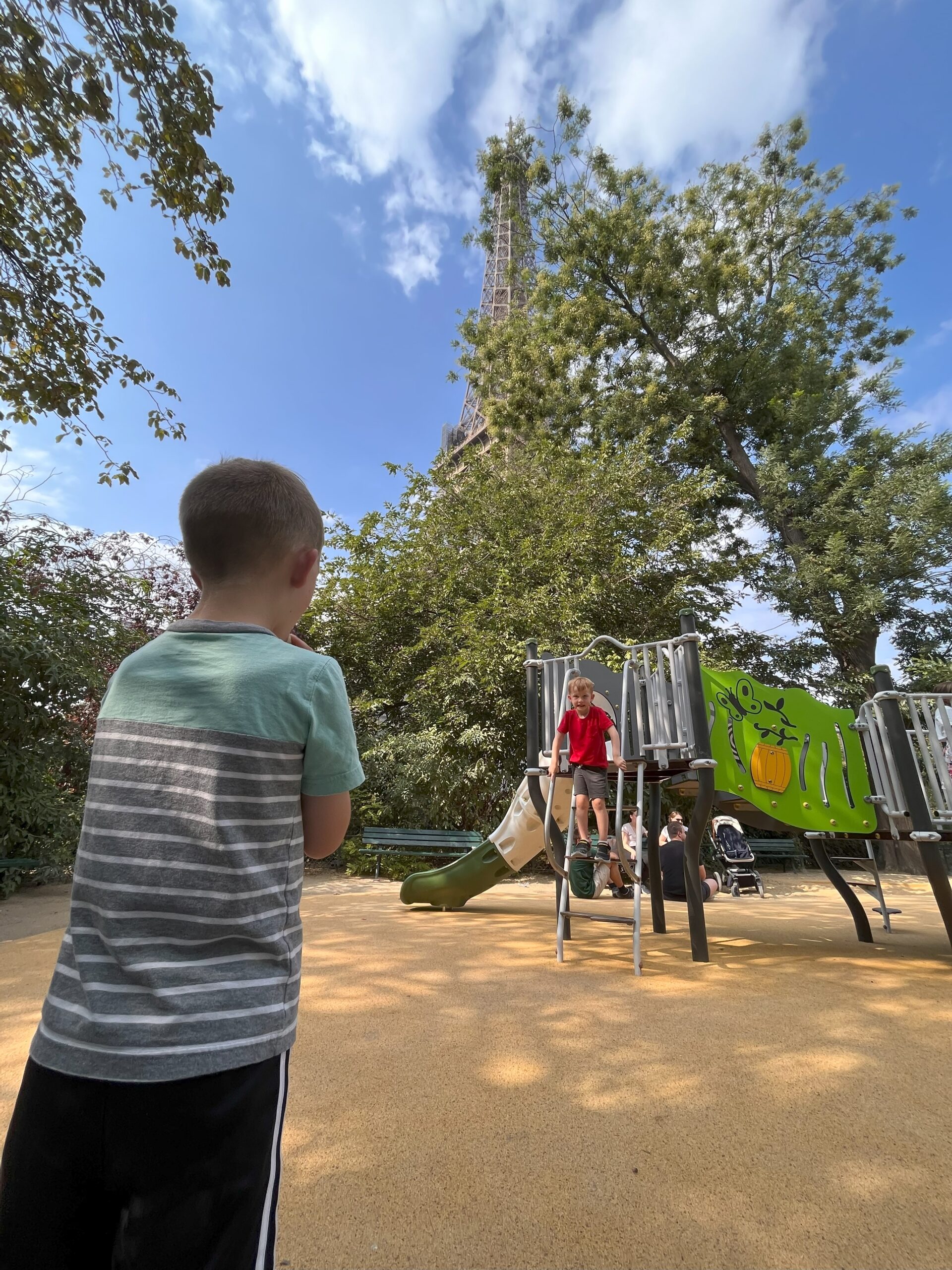
    Eiffel Tower and a playground!
    Obernai aka Beauty and the Beast

    Transcript

    Welcome to episode six of the Raising Citizens podcast. Today we are going to be talking about how visiting Paris is cheaper than visiting the mouse. You know who I’m talking about, the mouse. He lives in Florida. I don’t actually know if I’m allowed to say that word on a podcast and those are not the corporate lawyers that I am about to find out with.

    So everybody knows who I’m talking about. You’re with me. Last week we talked about how there are three ways that you can build in social studies understandings to your everyday life. One is talking, two is reading, and three is traveling. There’s a few of those strands of social studies that we talked about that really Come to life through travel better than any other way.

    Read the full transcript

    Culture, people, places, and environments, global connections. All of those are a lot easier to understand when you have something to compare it to. Also, travel is super fun.

    It’s just super fun. The kids really love it. But when we went on our first international trip, just the four of us, in 2022, we found out that there is a huge misconception about the price of such travel. And this was from people who go to visit the mouse like every year.

    In fairness, we have not done that trip for a full week. We’ve gone for a day with one of my sons and we did a full week with just the two of us a while ago, but we haven’t done the, you know, the full family trip. So I used a calculator to do a price comparison, and this was assuming that we would go for a week, we’d do a park hopper pass for five days, we’d stay in a mid range resort, we would be mostly eating there, so not cooking, like, back at the hotel and bringing it back.

    It does not assume, I don’t think it included, like, genie passes or lightning passes or anything like that. And it assumed that the flight was about 2. 75 from Massachusetts to Florida. No, I know the mouse also lives in California and it can do that as well. So the calculator said that it would be around 8, 500 to 9, 000.

    And that is in line with, like, talking to friends about, that’s approximately correct. When we went to Paris, we went Flew out Monday night, returned the following Wednesday, and our total cost was 6, 400. Caveat, We were super lucky, which I will talk more about in a bit,, because we were able to stay with a friend for a good portion of that time.

    We had previously had an Airbnb rented that we then canceled after this thing happened,

    So, assuming we didn’t cancel that Airbnb, a more realistic cost is like 7, 900. That includes everything from the second we walked out the door of our house to the second we walked back in. So, it does not involve the emergency door dash burgers that we bought when we got home like at six o’clock at night.

    But it does involve the gum that we bought at the airport.

    Could you spend more in Paris? Oh, yeah, baby, like, I think you can spend as much money as you want in Paris, but we are not influencers dancing on the rooftop of Le Girafe or anything like that. We went with, we went with a four year old and a seven year old and we spent a lot of time at playgrounds and a lot of time eating crepes and gelato.

    And we were very, very happy with our itinerary. So let’s break it down. Thank goodness for credit card statements and Google, because we’ve got a pretty accurate breakdown.

    The most expensive thing, we’ll go from most expensive to least expensive. The most expensive obviously was the flight.

    That was 2,353. I do have it down to the cents, but I don’t know about you, but in audio format, I cannot, I can do dollars. I cannot do cents. So I’ll put it on the website with the actual amount, but it was, 2,353 for the flight for all four of us. One thing that you might not know about flights is that most European airlines offer a discount for kids, usually under 11.

    So I think it was like a 10 percent discount for their seats. When we flew, we flew Iceland Air. We had a layover in Keflavik in Iceland, and it was about an hour and a half. We liked that airport so much that the next year we had purposely picked Iceland Air and purposely picked a longer layover in Iceland.

    The next most expensive category would have been the Airbnb category, if you include both air and B& B. So what happened was, I have a friend who lives in Paris, and that was one of the reasons why we chose Paris as where to go. And we had reserved a, an Airbnb in Paris. in Paris. We had that reserved and then we were going to go to Obernai, which is out near Strasbourg for a couple of days, over the weekend.

    And, , about a month before her neighbor, she was talking to her neighbor and her neighbor offered her apartment. So my friend went and stayed in the neighbor’s apartment and then she was able to let us use her apartment, which was great because obviously we could see her a lot more being in the same building.

    So that was there. But this Airbnb cost includes Both Airbnbs, including the one that we ended up cancelling. And so that was 19. 59 for that. It was 4. 58 for the one in Obernai. And that one we had reserved from Sunday to Wednesday. Do that math. That’s like, 89 a night or something like that. It was super cheap and it was gorgeous and it was so cute.

    We picked this place specifically because it looked like you just opened the doors to Beauty and the Beast. It was so cute. The next most expensive category was Food. That was 13. 42. So that includes everything from like, stopping for gelato, to stopping for crepes, to going out to restaurants.

    We also love going to the grocery store. So like, if you were going to visit the Maus, going to the grocery store is not that exciting because you have almost exactly the same grocery store at home. But, going to the grocery store is like an activity when you’re in France. So that was very fun, and we went to a couple of different grocery stores.

    Heh. near the apartment in Paris, to pick out different flavored fig flavored yogurt. Never seen it before. It was so great. , so it includes like the grocery store. It includes going out to dinner. , now like here’s going out to breakfast was like 56 at like kind of a bougie place where I know we got a lot of drinks because like orange juice and coffee and hot chocolate and another orange juice and then a wasp flew into my orange juice.

    And so then we got another orange juice. Like there was just, you know, that was, we were not, we were not budget conscious when we were going out to dinner. Obviously, we did not take them to any like Michelin restaurants because we had a four year old with us. But we went to some very nice places and had some very nice food.

    So that was 13. 42 for the food. Next most expensive was the transportation. So that included the high speed rail, the TGV from Paris to Strasbourg. It includes all of our subway tickets. It included the shuttle or the private limo, I guess it’s technically a limousine, that took us from the house to the airport here at home.

    I remember it was like a little bit less expensive than just parking, at the airport and obviously a lot easier. It also includes the Uber. The next most expensive category is actually, the next most expensive category is miscellaneous. That was 537. So miscellaneous was all of the cash that we took out.

    I think we paid for a couple of taxis in cash. I can’t really remember what else, probably like tips, although tips aren’t really a big thing.

    Maybe some souvenirs. It also includes 123 at the Paris airport on the day we left that I just simply cannot remember what that was. I have no idea. The next most expensive category was Souvenirs. We spent, that includes my 135 haul from one of the Paris pharmacies with all, Oh, I had so much fun. , it was, there’s, uh, these, all the French pharmacy stuff.

    So, like, , the A313 retinol is only like 7 euro there, so I got like two of those, or three of those because I gave them as gifts. And then, the Biore, Shower oil was like six euro for the super giant grande one. And that’s like 21 here or something. I don’t know. I filled a whole basket. I had a great time.

    That was like 135. so that was all of the souvenirs was 290 together. Like toys that the kids got, ornaments. Other stuff. Then after that, fees were 250. that includes, we ended up making a change. So we were supposed to come back around six o’clock on Tuesday from Obernai back to Paris, and we decided that we actually wanted to come back to Paris a little bit earlier.

    So we switched that train from the six o’clock train to the 10:00 AM train and that was about a $240 fee to change that. Not necessary, but just a switch that we made. The next category was tickets. So tickets was 149. That was for all four of us. And that was for, we did Versailles. Not the tour of the indoors of Versailles, just the, just the gardens.

    The, the tour was pretty long. The line was very long and we were worried about attention span with a four year old and a seven year old. So we did the gardens, which was still very cool. And you can do the outside, of the actual, Chateau. It also includes the Orsay Museum. We did not go to the Louvre.

    Again, lines were one concern. Air conditioning in that building was another concern. And just the total size of it was, was the third concern with, two kids.

    we also went on a boat tour of Paris. So down this end, we took a boat tour of the down there. It was actually a great way to start off the, it was one of the first days we were there. You know, you saw Notre Dame and the Eiffel Tower and the youngest one slept the entire, the entire time. I think it was like a kid’s version.

    It was like a pirate version or something. So they got like a little, , box, like a goodie bag kind of box there that had like drinks and candy and chips and all kinds of stuff that came with that too. And there was somebody doing the tour in, I’m pretty sure it was both French and English.

    So that was the third thing. And then the fourth one was we did a train tour in Obernai. It’s just one of those little like outdoor train things. It’s like a train car thing. So it goes on the road and it does all of Obernai. And it had the headphones that you could plug in and the You could do the tour in whatever language you want.

    The kids did the tour in Chinese. They did not understand any of it, but they did it. And then the last category was the phone. , it’s 10 a day to just use your same phone with the same phone number, abroad. So, that was worth it. We just did one of the two phones, and then I had Google Maps and all of that kind of stuff.

    For the whole trip. So that was 9 total days of, of the phone times 10 is 90 there. Alright, so what do you get for that? Like, for 7, 900 we’re calling it What do you get for that? And I know that it’s not apples to apples comparison. The time of year is different. Like what’s peak for going to France is not the same as what’s peak for going school vacation week.

    Going to, um, France for 8 days is kind of the minimum, whereas like going for 7 days to a theme park, that’s, you’re probably going to reach your maximum, like, you can’t really do 22, 000, you can’t really do 22, 000 steps a day for more than a week down there. So what do you get from there? Also, you might be thinking, This was 2022 and now we’re planning for 2025. That’s three years difference. Prices have gone up. So I did look up what I was able to easily kind of compare. So the flight is one of the things. Now the calendar is different because the, you know, we start school a little bit earlier and so you don’t have that last week Monday to Wednesday quite as well.

    But I picked out if you did, if you came back the Wednesday before school started. And you left, you know, the Monday before that. We paid 23. 53. And for almost the same flight, it’s 24. 62. I did pick the flight that has a 14 hour layover on the way back in Iceland. We loved our layover so much in Iceland that I actually think that’s an upgrade.

    But, about 100 more over four people. That’s not a lot. Terrible. And then the Airbnb that was in Alsace, almost exactly the same price. She’s not renting out yet in August. She doesn’t have that up. But if you look at prices in January, it’s almost exactly the same. And the one in Paris is more expensive.

    That one would have been around 1, 500. It’s now more like 2, 000 for the same dates. But, She also has about 200 more reviews than like the six she had when I was looking at it three years ago. So you probably could find another one that was not quite as expensive. So that’s what I have in terms of what I can compare price to price.

    It might be a little bit more expensive, but we’re not talking like even 10 percent more.

    Now, what do you get for that? What did we do? I know I said that we didn’t go To every museum, but here’s basically what we did. So we got there on Tuesday afternoon and we went to the Eiffel, we, we got there on Tuesday afternoon, dropped our bags, went to the Eiffel tower, got like crepes and gelato and snacks and did a carousel.

    And then we came back and had takeout at the apartment. The second day was Wednesday. We started off at the Luxembourg gardens and did the playground, got more gelato. And then. Did a boat tour, walked up to the boat tour, and then from the boat tour, walked back to Tulare’s garden. So we hit kind of a lot.

    And then on Thursday, we started off at the Arc de Triomphe and went to a park near there, Parc Monceau, looks like. And then we did dinner in Saint Germain and then, , watched the Eiffel Tower at night when it does its little sparkle thing from the, Alexander Bridge. On Friday, we went out a little further.

    We took the subway out to, Sacre Coeur, and then did Montmartre, the artist market after that, and then we walked back through, , like past the Moulin Rouge, and then we did the Orsay Museum just as it was closing, and then we got dinner with our friend back closer to the apartment. On Saturday, we went out to Versailles.

    And I will say that pricing was probably a little bit more expensive because the subway station right at Versailles was closed, so I think we had some weird, like, Uber transportation, whatever there. Sunday, we took the high speed train, the TGV, out to Alsace, and we just kind of walked around and had dinner, went to a couple shops.

    On Monday, we took that little tour train thing. And We had a failed attempt at family photos that we just did ourselves and we went to McDonald’s. I love going to McDonald’s. I feel like it’s a, it’s a stop. You, everybody should do it. McDonald’s is totally different in a different place. Anyway, that was our McDonald’s day.

    And then on Tuesday, because we train, because we changed the train, we came back, did, went back to the Luxembourg gardens and did the toy boats that you can kind of push around there. And then we walked up. to the pharmacy near Saint Germain and got all those fancy beauty products and then went to the very touristy Deux Magots and had drinks and snacks or whatever there and then on Wednesday we went home.

    So that’s, you know, kind of what you get for it. We had a great time. There was a lot of playgrounds sprinkled in there that weren’t even included.

    And, of course, like, there’s other, aside from just the educational reasons, and then the financial reasons, it’s also a different pace, which, personally, I like. Now, that is a personal decision, and you can obviously completely choose, but we played this all by ear. There was no, like, we had to be at a certain place at a certain time.

    At a time that we picked six months ago or a year ago, , all of our reservations we made maybe that day, maybe the day before. So, I like the pace and the flexibility, and especially with two young kids, if somebody needs a nap, you just schedule in the nap and nobody’s missing anything. So, we really liked it.

    So if finances are the thing that is holding you back from doing that adventurous, ambitious vacation, don’t let it be. And if you are dreaming about that ambitious, adventurous vacation in 2025 or 2026, and you want to get started planning it,

    I will be hosting a workshop in January about planning these types of vacations. We will be covering four main topics, packing, of course, , planning, of course, mindset so that you don’t lose your mind. Stuff while you’re there and how to talk to kids and how to talk to kids and prepare kids for trips in places that are unfamiliar.

    So those are the four topics that we’ll be covering. And if you’re on the early bird list, you will get to vote about whether we do this as a multi day workshop or just do everything all in one day and then Q&A the next day. So hop on the wait list that is raising dash citizens. com slash wait list, pop your email in there, and I will let you know the second registration is available.

  • Best Week Best Day

    Best Week Best Day

    Listen

    Notes

    It’s the best week of the year (book fair) and the best day of the year (TIBAL shakedown for teachers)!  Plus, we’ve got three places where we’re going to fit social studies into our everyday lives.  And a rant and a rave.

    What Afoma Reads

    Ty Allan Jackson

    Things I Bought and Liked

    The waitlist!  Join the waitlist to be the first to know about the early bird sign up for January’s vacation planning workshop.

    Transcript

    Coming soon

  • Guess the Year

    Guess the Year

    Listen

    Notes

    NCSS Standards

    Feast & Fettle 50% off your first box

    Transcript

    (0:03) Hey there, welcome to Raising Citizens. (0:06) We’ve got a world where social studies is shrinking, but over here, we’re expanding (0:10) it. (0:11) This is your guide to helping kids make sense of the world, one concept, one routine, one (0:16) small change at a time.

    (0:17) I’m your host, Meghan Dyer-Pavs, a former teacher and a current mom. (0:21) Let’s jump in. (0:35) Welcome to episode four of the Raising Citizens podcast.

    (0:39) We are so happy that you’re back. (0:42) All right, today on the podcast, we are going to talk a little bit about social studies (0:46) standards, which I think are very fun and lots of people think are very boring. (0:50) And then we’re going to talk about the Guess the Year game, a game that my husband came (0:54) up with that I think will maybe be fun for your Thanksgiving table.

    (0:58) And then we’ve got a Feeding Citizens and a historical document, we’ll call it. (1:07) It’s a full Thanksgiving smorgasbord. (1:09) So let’s get started.

    Read the full transcript

    (1:11) First of all, last week I launched the podcast and can I just say, everybody should launch (1:15) something. (1:15) Everybody should launch something so that you can see how people hype you up. (1:21) Everybody talks about the trolls and they talk about like the meanies, but nobody talks (1:26) about the cheerleaders.

    (1:28) I have had friends and family and people from high school that I haven’t seen in 20 years (1:33) and co-workers-in-law from 15 years ago. (1:36) I mean, I thought about naming everybody who has liked, commented, texted, signed up for (1:42) the newsletter, rated and reviewed, but I started naming that list and it got real (1:48) long and boring. (1:49) So thank you very much.

    (1:52) You guys are the best. (1:53) And if you’re thinking of launching something and you’re scared because you think everybody’s (1:57) going to be mean, they’re not, or at least they’re not yet. (2:00) Maybe someday I’ll get famous enough that the trolls will come out.

    (2:03) But right now, love you guys. (2:05) All right. (2:07) So let’s talk about the standards for social studies.

    (2:12) What are standards? (2:14) Standards are a big document written by a group of experts that brainstorms everything (2:22) that a kid would need to know and be able to do by the time they graduate, in this case, (2:27) in social studies. (2:28) So the way they talk about it is it’s a framework for curriculum design to prepare students (2:35) for the challenges of citizenship in a democracy. (2:38) And this is why I love it.

    (2:39) Like, the challenges of citizenship in a democracy, that’s chills. (2:45) I love that. (2:46) Like, we get a lot to talk about when it comes to challenges of citizenship in a democracy.

    (2:51) This is not just like, what year was King George King? (2:55) This is like, how does it affect me in my everyday life, and how am I going to make (2:59) it relevant? (3:00) So anyway, I love standards. (3:02) I like to learn out on them. (3:03) Come with me for a little bit as we discuss them today.

    (3:07) And why do we care? (3:08) I mean, I just love them because I love them. (3:10) But why do we care as parents? (3:13) One, it helps to know whether or not our kids are on track. (3:19) And it helps us to see what is the vision for what our kids should be able to do by the (3:25) time they graduate.

    (3:27) And then from there, where are the entry points where we can start to provide support? (3:34) So we’re going to talk about all of those things. (3:37) But let’s start with what are these, what’s the high-level overview? (3:41) Let us dip our toe into these standards. (3:44) What’s the high-level overview of what they are? (3:47) There’s kind of two pieces to the National Council of Social Study Standards.

    (3:52) One is the 10 themes of social studies, and that’s kind of the what they should be learning. (3:58) And then there’s the C3 framework, and that’s sort of the how. (4:03) It’s the college, career, and civic life.

    (4:06) So first, let’s go over what the 10 themes of social studies are. (4:11) Number one, culture. (4:13) Two, time continuity and change.

    (4:17) Three, people, places, and environments. (4:20) Four, individual development and identity. (4:25) Five, individuals, groups, and institutions.

    (4:29) Six, power, authority, and governance. (4:33) Seven, production, distribution, and consumption. (4:39) Eight, science, technology, and society.

    (4:42) Nine, global connections. (4:45) And 10, civic ideals and practices. (4:48) As I’ve been talking to people about this podcast, I think there are people who gravitate (4:56) towards the 10th one and think that that’s what we’re, what we need to do here in order (5:02) to develop citizens is just the civic ideals and practices.

    (5:05) How do you vote and that sort of thing. (5:07) But what I love about it is that these experts have agreed with me that that’s only one-tenth (5:13) of what we’re addressing. (5:14) We’re addressing all these other things.

    (5:16) So that’s the what. (5:18) And some of those are going to seem really familiar. (5:21) It’s the same way that I feel like it was framed out for us when we were kids.

    (5:25) You have history, that’s kind of the time continuity and change. (5:28) You have geography, that’s the people, places, and environments. (5:32) Production distribution and consumption, hello economics.

    (5:36) Those seem really familiar in those discrete separate topics of study that we learned about (5:44) as kids. (5:44) But then others are through lines that are meant to connect. (5:49) So like culture or global connections or individual groups and institutions.

    (5:55) Those cut across all of those. (5:58) And as we look at the framework for college, career, and civic life, that’s kind of the (6:05) how. (6:05) So there’s four dimensions.

    (6:07) One is developing questions and planning inquiries. (6:10) So the idea is we’re not just sitting in a lecture while an old guy probably with white (6:15) hair lectures us and tells us all these dates and then quizzes us to make sure that we’ve (6:20) memorized all these dates and places. (6:21) We’re developing questions and planning inquiries like how was the country started? (6:27) How was the USA founded? (6:30) So in there you could go into, well, this is when the Declaration of Independence was (6:33) written but also the Articles of Confederation didn’t happen until here.

    (6:38) The war didn’t actually end until here. (6:39) We didn’t actually get together and actually meet up to talk about this until this year. (6:44) So it’s a little more complicated and a little bit more interesting.

    (6:49) So that’s dimension one is the questions and inquiries. (6:51) Two is applying the disciplinary tools and concepts. (6:54) So this is civics, economics, geography, and history.

    (6:57) Like you need to be able to use a map. (6:59) You have to know what a timeline is in history. (7:01) Those are kind of the tools and things like that.

    (7:04) Three is evaluating sources and using evidence. (7:08) That connects really nicely to the English language reading and writing standards. (7:14) And then dimension four is communicating and taking informed action.

    (7:19) So great. (7:20) You learned all this stuff. (7:21) Now what? (7:21) Can you tell that somebody else about it? (7:23) Can you make a plan to take action based on what you know now? (7:27) So that might be the same as you’ve been thinking about with social studies or for me, it was (7:32) a lot bigger.

    (7:33) And also as I’m diving into these, I mean, understanding what the vision is and are my (7:38) kids on track? (7:39) No. (7:40) Quite frankly, I’m looking at these. (7:42) I’m not sure I’m on track, guys.

    (7:44) Let me just give you, let me just give you an example, right? (7:47) These are divided all up into early grades, pre-K-4, middle grades, 5-8, and high school. (7:54) So I’m looking at the early grade standards because that’s where my kids are. (7:58) One of them is they should understand key concepts such as past, present, future, similarity, (8:04) difference and change.

    (8:05) Cool. (8:05) Got it. (8:06) I can also support that pretty easily at home, right? (8:09) We can look at things in the past.

    (8:10) We can talk about how life is different for them than it was for me, than it was for their (8:14) grandparents. (8:16) That’s we can handle that, right? (8:17) That’s pretty easy at home. (8:20) But then also not every standard is that simple.

    (8:23) So here’s one, also from the early grades, identify and examine how wants and needs in (8:29) one part of the world may conflict with wants and needs of people in other parts of the (8:33) world. (8:34) Okay. (8:34) That’s, that’s got a few more layers to it, right? (8:36) Like they got to know what wants and needs are.

    (8:39) Okay. (8:40) I can handle that. (8:40) Like, especially in our ongoing discussions about a PS5, they have to know what other (8:46) parts of the world are and how culture and environment might be different in other parts (8:51) of the world.

    (8:51) Okay. (8:52) That’s something that we can handle with travel. (8:54) It doesn’t even have to be international travel.

    (8:57) If you are in New England and you have grandparents in Florida, you can talk about the differences (9:01) about why somebody in New England might want to coat and somebody in Florida might not (9:06) in February. (9:07) And then how wants and needs conflict can easily talk about that with siblings. (9:12) Talk about how one person wants one thing or somebody else wants something else.

    (9:16) And then it’s easier to expand that to a more macro level. (9:20) Now, I am not suggesting that you are responsible for teaching every single one of these standards (9:26) to your kids, but I wanted to point out a couple of ways in which you can, or probably (9:31) already are, supporting these ideas with your kids. (9:37) And being just a little bit more intentional with your language about like wants and needs (9:41) or conflict, including some more of those vocabulary words can help kids build that (9:46) understanding and see the connections.

    (9:48) Because anytime, like even if they learn it in school, kids need to, like part of learning (9:53) is the repetition over and over and over until you actually get it. (10:00) So talking about how like, I’m not sure even I’m in the vision. (10:03) So that was, you know, the wants and needs thing.

    (10:05) There’s three columns. (10:07) So there’s the early grades, the middle grades, and the high school. (10:10) And I’m looking at this coordinating standard for high school.

    (10:14) And it is, analyze the relationships and tensions between national sovereignty and (10:18) global interests in matters such as territorial rights, economic development, and use of (10:23) natural resources and human rights. (10:27) No, I’m not sure I can do that, actually, independently. (10:31) I think we should.

    (10:33) I think it would be great. (10:35) I think it would be wonderful if the only people who understood the foreign policy portion (10:42) of a presidential debate weren’t just the people on that stage. (10:51) I think it would be great.

    (10:53) But but like, yeah, we should know this and we don’t know this. (11:01) So while it might seem like, wow, that early grade standard seems really complex for a (11:06) nine-year-old. Yeah, if I think about it, he probably, yeah, he could figure that out.

    (11:09) We’d have to teach him, but he could figure that out. (11:13) And as I’m seeing the progression here, it is actually really critical that he does know (11:17) that because he should then be able to understand foreign policy by the time he’s (11:21) graduating high school. (11:23) The majority of the population should be able to engage in that level of debate about what (11:29) that means for our democracy as a citizen, as you vote.

    (11:33) But one of the things I really want to emphasize about these standards is that it is not (11:38) just a list of things. (11:40) They are very focused on inquiry. (11:42) One, not just memorization and two, connections.

    (11:47) So we are connecting the present to the past. (11:49) We’re connecting cause and effect, multiple causes and multiple effects. (11:53) We are connecting across these different themes of social studies.

    (11:57) So if we’re looking at economics, we, of course, then have to be connecting to global. (12:04) That’s a global connection. (12:05) We have to be connecting to that strand as well.

    (12:08) So, oh man, I hope you, if you have any interest in them, I hope you take a look. (12:15) I will put the link in the show notes to both the 10 themes and also the C3 framework. (12:24) I love these and I’m ready to get out my post-its and my chart paper and my Mr. (12:30) Sketch markers and start homeschooling.

    (12:32) Almost, almost. (12:33) I’m not, we’re not actually homeschooling, but we will use these to keep finding more (12:37) ways to expose kids to more things and build those muscles of inquiry and connections as (12:43) we raise our little citizens. (12:46) Let’s hop into our game.

    (12:50) All right, so this game, my husband came up with it. (12:56) All right, so let’s hop into our game. (12:57) This game is kind of like Who’s Line, if you remember that, where the points don’t (13:03) matter and the rules are made up.

    (13:05) And my husband came up with it one day at the dinner table and it’s really fun. (13:09) And I hope you try it at your Thanksgiving table or at your everyday dinner table. (13:14) Here’s how it goes.

    You open up a Wikipedia page, you type in a year into the search (13:20) bar, and then you read things off that page until somebody guesses what year it is. (13:25) So you give a clue. (13:27) Everybody has to guess the year.

    (13:30) If no one gets it, you read the next clue. (13:33) Now you have to guess a year in order to get the clue. (13:35) You have to be willing to embarrass yourself and be very, very wrong in order to get the (13:41) next clue.

    The way that we do it at our house is we have two teams, one parent and one (13:46) kid on each team. (13:48) Couple of reasons for that. (13:49) One, you should have an adult guessing at all times because sometimes the kid guesses (13:55) are really all over the place.

    (13:58) And two, we only let mom and dad read off of Wikipedia because sometimes there are some (14:04) things on there that a six year old should not be reading. (14:07) It also gives them a little bit of help without giving obvious hints. (14:13) So like if you give the clue, the Beatles recorded their first album and they shout (14:19) 1733, you can then come back with like 1952, which is also not right, but closer and (14:26) gives them like, OK, I’m going to kind of they can kind of figure out, OK, let me pick a (14:30) number a little bit closer to there.

    (14:32) And then I think the way we do the winner is whoever gets the year right gets to pick the (14:37) next year. But again, the rules are made up and the points don’t matter. (14:41) So do it however you want.

    (14:43) So I think a good way to show you how this works is we are going to play it together (14:48) right now. I cannot hear you. (14:51) So hop on over to Instagram and tell me which clue gave it away for you.

    (14:57) All right. So I’ve typed in my year. (15:00) Here we go.

    (15:01) The Republic of China is established. (15:07) Mayor Yukio Ozaki of Tokyo gives 3,000 cherry trees to be planted in Washington, D.C. (15:15) That might be a giveaway for my D.C. (15:16) friends. Wilbur Wright of the Wright Brothers dies of typhoid fever in Dayton, Ohio.

    (15:28) The first Eagle Scout from the Boy Scouts of America earns his rank. (15:37) Arizona is admitted as the 48th state. (15:43) The African National Congress, a South African political party, is founded as the South (15:48) African Native National Congress.

    (15:54) Casimir Funk identifies vitamins, like the concept of vitamins. (16:03) Jackson Pollock is born. (16:09) New Jersey Governor Woodrow Wilson wins the presidential election.

    (16:17) Werner Von Braun, German-born American physicist and engineer, is born. (16:25) And then the last one, because I think this is a giveaway, the RMS Titanic sinks. (16:32) Did you get it? The answer is 1912.

    (16:37) All right. Hop on over to Instagram. (16:38) Tell me which clue was the one that gave it away.

    (16:41) So that’s kind of like one of the ways that you can modify this game, right? (16:44) Like, if the kids are getting bored, then you just put one that’s a little bit more (16:47) obvious, like either Woodrow Wilson or the Titanic. (16:51) You put those ones up front if they’re, you know, you don’t go through as many if (16:55) they’re starting to get bored. But then the next person gets to pick their year.

    (16:59) I might suggest putting some parameters on it. (17:03) My six-year-old picked 3 BC. (17:06) That was pretty difficult.

    (17:07) It’s kind of difficult to distinguish between 3 BC and 30 BC and really even 300 BC (17:13) with those clues. So, yeah, I hope you enjoy it. (17:17) It’s really fun for grownups, I think, because some of them like break my brain.

    (17:23) I didn’t know typhoid fever was like such a thing still in 1912. (17:29) For example, I probably would have put the 48th state a little bit closer to like (17:34) Hawaii and Alaska more towards the middle of the century. (17:36) And then for kids, it really helps on that time continuity and change theme from (17:42) social studies, which is extremely difficult for kids to get a handle on.

    (17:47) I’m sure you’ve had a kid come up to you and ask you if you were born at the same (17:52) time as the dinosaurs. (17:54) It’s just really hard for them to get it. (17:58) And this is one of the ways to begin to understand those linkages between human (18:02) decisions and consequences.

    (18:04) And to also understand that even in the past, we might just be looking at one (18:09) slice of the past, but there was still a lot of other things going on. (18:14) So we might only be thinking about the sequence of transportation, right? (18:19) So the Wright brothers flew, people took cruise ships. (18:23) I didn’t know that like he died before the Titanic even sailed.

    (18:26) I didn’t know that. But we might be looking at just that slice of history without (18:34) realizing that there’s all these other things happening. (18:37) Vitamins were identified.

    (18:39) Here’s what was happening in Japan. (18:41) Here’s what was happening in South Africa. (18:44) The Boy Scouts were getting started around that time.

    (18:47) Also, it gives a lot of context and it’s really fun and you can get very competitive (18:54) about it. So I hope you try it out. (18:56) And if you do, let me know what your favorite year to guess was.

    (19:01) And now it’s time for Feeding Citizens, where we talk about how we are keeping these (19:05) little citizens alive three times a day, every day for their entire lives. (19:09) And this week, I’m going to be honest with you, it is feast and fettle. (19:12) Feast and fettle is a meal service.

    (19:13) And that is what I ordered for next week. (19:16) They did not sponsor this. (19:18) I’m running the book fair next week and my husband usually shifts his schedule to the (19:22) afternoon so that he can help in the morning with the book fair.

    (19:26) So the afternoon is a little crazy around here. (19:29) And that’s what we’re going to do. (19:30) It is a meal service.

    (19:31) It’s our current favorite. (19:33) It’s different from other meal services in that you don’t cook. (19:36) It’s like catering delivered to you in smaller portions.

    (19:41) So you choose some entrees, you choose some sides. (19:43) And in theory, you could make it a menu like you could do the herb crusted pork chops (19:48) with the rice pilaf and the balsamic glazed carrots and just put it out as a meal. (19:53) We kind of don’t do that.

    (19:54) We just pull it all out and then we save ourselves both on cooking time and on (19:58) arguments about I didn’t like that. (19:59) I didn’t want that. Why did you make that? (20:01) I have a referral code and I’ll put it in the show notes.

    (20:05) If you use my referral, you’ll get 50 percent off your first order. (20:08) And of course, there’s a kickback for me as well. (20:11) They don’t currently deliver nationally, but they are expanding.

    (20:14) So pop in your zip code and see if it’s you. (20:17) You might not be running a book fair in December, but December is December and we’re (20:21) all running at maximum speed. (20:23) And now it’s time for our historical document.

    (20:26) And this is in honor of the best and only Thanksgiving movie of all time and the (20:34) author’s birthday this week, Charles Schultz. (20:37) This is a letter that Charles Schultz wrote, responding to a kid who asked, what (20:41) makes a good citizen? (20:43) He wrote, Dear Joel, I think it is more difficult these days to define what makes (20:47) a good citizen than it has been ever before. (20:50) Certainly all any of us can do is follow our own conscious and retain faith in our (20:55) democracy.

    Sometimes it is the very people who cry out the loudest in favor of (21:00) getting back to what they call American virtues who lack this faith in our (21:04) country. I believe that our greatest strength lies always in the protection of our (21:08) smallest minorities. (21:10) Sincerely yours, Charles M. (21:12) Schultz.

    And that was written November 9th, 1970. (21:16) That’s all for today. Thanks for listening to the Raising Citizens podcast.

    (21:20) To send me a message, you can hop over to Instagram. (21:23) I’m at Raising underscore Citizens. (21:26) For show notes or to sign up for our newsletter, head over to raising-citizens.com/. (21:32) If you’d like to help the podcast, you can give a rating or a review.

    (21:37) ¡Hasta luego!

  • Challenge Mode

    Challenge Mode

    Listen

    Notes

    1968 DNC – Enjoy the rabbit hole!

    Transcript

    Hey there! Welcome to Raising Citizens. We’ve got a world where social studies is shrinking, but over here, we’re expanding it. This is your guide to helping kids make sense of the world. One concept, one routine, one small change at a time. I’m your host, Meghan Dyer Pavs, a former teacher and a current mom.

    Let’s jump in!

    Welcome to the Raising Citizens podcast where today we are raising citizens on challenge mode. So, I launched Raising Citizens on Instagram and on Uh, the website and all that kind of stuff, uh, back at the beginning of October. And then we had an election and, um, that was not really what I was thinking would happen.

    Read the full transcript

    Uh, ah, so, um, I’m not gonna get too deep into my predictions for what I think is gonna happen or, uh, my reactions or anything like that. I said more than three sentences to a friend, you know, on, uh, Wednesday or Thursday or whatever last week. And I scared her so badly that she came the next day with four pints of Ben and Jerry and an orchid.

    So, um, I will just say I believe that he is going to do what he promised he would do. And I believe that the system of consequences is probably going to work about as well as it has so far, which is To say he is the president elect. So that’s all I’m going to say about that. But, um, no, I did not start raising citizens as like a preemptive resistance thing because I predicted that this was going to happen.

    I’m probably not going to talk very much about it. Real time things that are happening with this administration. There are a zillion other podcasts and places where you can get that information that will cover what’s happening and why, and the implications and how far outside precedent is and all that kind of thing, but, um, part of what was hard about the first administration was the chaos and the distraction and the adrenaline and cortisol rush that came from kind of staying on your toes all the time and never know what was coming down the pipe.

    And so that’s not. really the goal of Raising Citizens in the podcast. Um, the goal is more to be a long term solution and not a crisis response. So in this podcast, I want to try to be careful that we’re not latching onto things just because they’re emotionally fiery. There’s a lot of slow, boring systems and Frameworks and things that are still really important that I would like to dive into, you know, things that fall into that important but not urgent quadrant of the priority matrix.

    All that to say, also, we kind of already were raising citizens on challenge mode. You know, this might be like challenge mode plus, but the reason why I started raising citizens is because we were Already facing a number of challenges that some of which have been talked about a lot, and some of them might not be quite as obvious or front and center, but like, you know, you have a crisis of loneliness and identity and belonging from kids, like basically as long as young, as they’re able to answer survey questions, you have an economy that requires both parents to work and an insufficient childcare capacity, particularly over the last four or five years.

    But It has long, for like 10 years or more, been the case that you had to put your name on a list before you were even pregnant. You have technology that’s now creating two ladders of maturity that we now have to manage. So you have the real world. Levels and rungs and then you have the digital world. So parents have like these double decisions about like, Are you ready for solo playdates?

    Are you ready for sleepovers? Are you ready for a phone? Are you, which phone apps are you ready for? How far can you walk in the neighborhood? How far can you bike? And all that kind of stuff is just kind of, technology has doubled that and complicated it in some ways. You have a workforce that’s changing so quickly that half the jobs that you look at now You couldn’t have even explained to your high school self at the time.

    So career prep for kids and asking kids what they want to be when they grow up is like impossible. You have habits of visiting and seeing people in person that is basically non existent outside of school and work. Um, there’s just, you also have, you know, a media environment that is completely different from when I am old enough to remember when we still had a TV that you could only click to like.

    20 channels or whatever, and they were a click dial on the actual TV. Um, so things were already filtered through fact checking and institutionalized and there were, you know, good things about that and bad things about it, but it was simpler for sure. It was less complicated. And now of course you have a zillion other media platforms in addition to being able to search just literally anything you want to on the TV.

    So there’s just a lot of challenges that we are looking at that kids need to be more prepared and more flexible than they have been either way, regardless of which way the election went, we, there’s, there’s a lot that we need to work on. So, um, Looking ahead, you know, what are we going to do about raising citizens on challenge mode?

    We’re going to do self care. We’re going to keep ourselves sane. And when I talk about self care, I’m not talking about like the massages and facials and manicures side of things. I’m talking about like the toddler care style, the like relentless aerobic version of like, did you eat enough? Did you sleep enough?

    Did you eat enough vegetables? Have you run around enough? You know, we’re going to do some current events in our house still, but There’s the more emotional ones. We’re just gonna You know, maybe sit on those for a couple days and work out our own emotions, meditate before we bring those to the kids. Um, we’re not going to lie to our kids.

    We are, I might say we need to talk about that in a couple of days or I’m not ready to talk about or let me think about how I’m going to explain that, but I’m not going to lie to them. And actually as I’m looking at this list of things, like this is just, this is also the rules, like the unofficial rules of grief, like you maintain routine, you make sure that you’re being honest with them and you, um, make sure that you explain things to them.

    So, uh, yeah, we’re going to use the rules of griefs there. Um, and then I also, I ordered a physical copy of the, uh, National Social Studies Standards because, um, I think that that is a really well thought out document that I’m going to continue to draw from. Either way, and you know, make sure that I have that in physical copy so that it is available to us.

    So that is raising citizens on challenge mode and on super challenge mode. So I hope you stick with us as we figure this out together moving forward. And now it’s time for a segment we’re going to call His Story Time. And today’s story is about the 1968 election season. Wow, what a doozy. I had fallen down this Wikipedia rabbit hole a little while ago, and then I came back to it.

    It’s even deeper than I thought. So to start us off, we are heading into 1968. We’ve got LBJ as president, Lyndon B. Johnson. He had taken over the presidency in 1963 from JFK after his assassination. So he had done a piece of that term. Then he ran for reelection in 1964, won that, had his full, full term and was expected to run again in 1968.

    So the New Hampshire primary comes up, the Democratic Party. McCarthy, Eugene McCarthy, who is not the same as Joseph McCarthy of McCarthyism, this is a different one, this is Eugene McCarthy, had decided to launch a primary against him in New Hampshire. But LBJ really didn’t campaign up there, it kind of was no big deal, and then all of a sudden the primary happens, and.

    Johnson only won 49 to 42. So all of a sudden it’s like, whoa, McCarthy actually had a really good shot here. And that’s at the beginning of March. And because this is like obvious that challengers have a shot here, RFK, Robert F. Kennedy, the original one, not the brainworn one. So now it’s like the middle of March and RFK, who at the time was the attorney general, decides that he’s going to launch a campaign as well.

    End of March. LBJ decides to pull out. So we’re at the end of March. It’s March 31st, election season. Now we’ve got two new candidates. Incumbent isn’t running anymore. About a month later, Hubert Humphrey, who was the VP, decides to run, the end of April. And so now there’s like primaries happening all over the place, but like people haven’t gotten, you know, like, You know, there’s some people are running in some states and some people are running in other states because the, the timeline to get on the ballots is a little bit different.

    So not everybody’s on everything anyway. So you’ve basically got McCarthy, Kennedy, and Humphrey who are running. By the way, his name is Hubert Horatio Humphrey, which if you are looking to name a child, just want to Hubert Horatio Humphrey. You’ve got three people running June 4th. You’ve got the California primary and a couple other ones.

    And California’s winner take all, RFK wins on June 4th. That puts him in second place. We’re still fairly early in the primary season. Although late for us now, like June is late. This is only two months later. RFK is assassinated walking out of his victory speech. So now you’ve got Hubert Humphrey is the clear favorite on this one.

    He had already been in first and Kennedy that with California that put him in second. So Humphrey is going to be the one. There’s some other drama. You go to the 1968 convention. And also part of the reason why Johnson had, the main reason he had pulled himself out is because he was so unpopular with the Vietnam War happening, familiar.

    So he had pulled himself out. So Humphrey is the candidate. It’s pretty simple once you get to the, um, you know, at the convention, aside from the fact that there’s the major protests and things, beatings that happened outside the convention center. And McCarthy, who is the anti war candidate, is not enthusiastic about this situation.

    On the other side, with the Republicans, you’ve got Nixon running. He ends up being the Republican candidate who wins. But, um, he had been vice president under Eisenhower from 1953 to 1961. And then after they left office, he ran for governor of California in 1962 and lost and retired from public office and like angrily told everybody, this is going to be my last press conference.

    And so that was back in 1962. Now 1968, all of a sudden he comes out and he’s like, yeah, I’m running for president. Turns out Reagan also ran that year, like we’re only in 1968. He didn’t end up winning until 1980. Also Nelson and Winthrop Rockefeller, both were advocate, were nominated at the convention. So Nelson actually launched a campaign and Winthrop’s the only time I think the brothers have competed against each other at the convention.

    So Winthrop was. A favorite son from his state. So he didn’t actually run a campaign, but his state nominated him at the convention. So both of their names were on the ballot. And then, you know, after the first ballot, they were both off, but yeah, a lot of drama on both sides. And so, um, you go into the actual, then what actually happened, of course, is that, uh, Nixon won.

    He beat Hubert Humphrey by only 500, 000 votes. And part of the reason why that happened is because George Wallace, who You may know from his fun segregationist antics, uh, ran as a third party for the American independent party and. Get this. Okay. So get this on George Wallace. Get this. So he ran as the American Independent Party.

    The American Independent Party was formed in, on July 8th, 1967. So like immediately before the 1968 election. Fun fact about 1967 for George is that he had been governor prior to 1967. He couldn’t run for a second term because of term limits. So he ran his cancer riddled wife instead. With everybody knowing that she would be on the ballot, but he would actually do the governing.

    She became the first female governor in January of 1967, and then died from cancer in May of 1967. Then, two months later, the American Independent Party is founded, and he is nominated for president from there. He won 13. 5 percent of the popular vote, which was like 9. 9 million. Anyway, if you think that we’ve got a lot of drama now, we do, but, um, 1968 was fun because you had a vice president running as the Democratic candidate because the incumbent president stepped down early, causing some chaos.

    There was an assassination attempt and also an assassination and the Republican party ran a future criminal and it was spoiled by a third party vote. But that’s the fun story about 1968. Enjoy the Wikipedia hole. It’s really fun.

    Thanks for listening to the podcast. If you’d like to help the podcast, you can give a rating or a review.

    For show notes or to sign up for our email list, visit the website at raising-citizens.com/. You can find me on Instagram to send me a message, @raising_citizens. Hasta luego!

  • 3 Ways to Teach Current Events

    3 Ways to Teach Current Events

    Listen

    Notes

    The Week Junior

    CNN 10

    CNN 10 YouTube channel

    Weeknight Nachos

    Deb explains pandemic parenting

    Transcript

    Hey there, welcome to Raising Citizens. We’ve got a world where social studies is shrinking, but over here, we’re expanding it. This is your guide to helping kids make sense of the world. One concept, one routine, one small change at a time. I’m your host, Megan Dyer Pavs, a former teacher and a current mom.

    Let’s jump in. 

    Welcome to the Raising Citizens podcast.  Today’s episode we are talking about three ways to teach current events or three ways to bring current events into your house. For context, I have a nine year old who’s in fourth grade and a six year old who is in first grade. And when I’m talking about social studies and um, expanding, um, social studies.

    Social studies at home. I’m not just talking about like maps and the branches of government and the kind of things that you probably think about when you think about social studies class from when you were in school. When taught exceptionally well, social studies is a really, really interdisciplinary subject because it encompasses really anything about how people work together or have worked together. 

    Read the full transcript

    And so when it comes to teaching those ideas, textbooks can clean up those things really nicely and really neatly in a way that I actually think is unhelpful for understanding how different things all work together. Um, so in discussions about current events or talking about what’s happening, you can kind of see how one topic bleeds into the other a lot better.

    And then, of course, in addition,  I don’t know about your history courses, but mine usually started At the Revolutionary War or at the Civil War and just ran until the school year ended. So, I’m not sure we ever made it past the Eisenhower administration and I had  Still probably do still have a pretty major gap from like the Carter administration until like, I don’t know, Bush 2, uh, when I kind of started making sense of the world again on my own. 

    So those are kind of the problems that can happen with current events. And when I’m talking about it, I’m not just talking about, you know,  every once in a while there would be a teacher. who would have a current events thing where you would have one assigned student who needed to bring in a newspaper clipping.

    But we want to talk today about, um, some routines that would keep it a little bit more consistent and make it a little bit more interesting for the kids.  It can be tricky to choose sources, um, and to keep them up on current events. You know, for example, I really don’t like them watching The actual news, the national news, is typically  too violent, um, depending on what is happening.

    Um, and then the local news, I feel like it’s great for weather, but, um, it can be too fear mongering with like scams and break ins and whatever other nonsense. So, here are the three ways that we have found that are actually working for us.  The number one thing that is working for us best is The Week Junior. 

    The Week Junior is a weekly magazine. It comes to our house, it’s mailed to our house, I think usually on Mondays. It’s best for ages like third grade ish and up. My six year old will look at it and there are some pieces that he’s interested in, but in terms of like being able to really read, it’s really written at about a third grade level. 

    It includes, it’s extremely comprehensive. So it starts out with the national news. Or any really major news stories. And then there’s a section about around the world that has a full two page spread about world events. So it’s a full global map. Um, and then it has like different stories all around the outside of the pages with arrows about where these things are happening.

    So it kind of connects. the geographical knowledge with the current events knowledge. Um, there’s an opinion section, there’s a people section, a science and technology section, a sports section, arts and entertainment, how to, uh, puzzles and quiz, um, and then like stories from kids. It’s really like the magazine or like the newspaper that used to be delivered to your house on the front doorstep every day or like the, I think it was like the Saturday um, Hartford Courant that I used to read all the time.

    It’s really comprehensive and extremely well written. Um, my son is really excited when it comes, and I would say he skims the stories. I’m not sure he reads every single story cover to cover, but like, let’s be honest, do we? We don’t do that either.  But I’m often surprised by how often he will bring up something in there that I didn’t necessarily think he read.

    Like, sometimes it’s movies. I do know he reads definitely the movie section, you know, when Wild Robot came out or other things like that, or they announced that Super Mario 2 was coming out. But sometimes he’ll also come up with like, oh yeah, well that’s not going to be a problem anymore because they just, uh, well they just approved a new nasal spray for allergies.

    So that’s like going to make it way easier for kids with allergies. I had no idea. Um, but, um, we really like it. Quite frankly, as I, as I was reading through, um,  a couple of them to kind of get my thoughts together. I was like, I should read this more often. I, I should, this is good for me. I should read this.

    It’s much more comprehensive than anything else I’m reading. So that’s exciting. It’s fun. And it’s the number one way that we do it. The second one that we have tried is, uh, CNN 10. CNN 10 is released daily, Monday through Friday on YouTube. It’s hosted by Coy Michael Wire, who I guess is a former NFL player.

    It’s  It’s sort of, it’s, it’s purpose is to be used in classrooms, so  it’s 10 minutes and then at the end they do a shout out to one school.  What I really like about it is that  CNN, because they’re a huge news organization, have an incredible amount of visual footage that they can use. So it’s really well done in terms of, uh, It’s the same sort of footage and the same sort of set up on some of the reporting.

    I think it’s much better explained. And it’s very appropriate for kids. They are not, you know, in war zones. It’s not the same footage that you would see on regular CNN or on any regular news station. They say it’s appropriate for ages 13 and up. I haven’t seen anything too graphic or objectionable for my nine year old, and I would let my six year old watch it also.

    I watched it by myself first, um, and then I let them watch it with me. I watched, before I watched it with them, I watched, like, the October 7th episode, a couple of election episodes, Ukraine. You know, some of the  hot button areas where you would think, like, this is a possibility, you know, this is the potential of getting a little graphic or a little inappropriate.

    I But I didn’t I didn’t find anything that was objectionable for us. My nine year old understands it better. My six year old watches it. He’s interested. We just have to pause it a little bit because sometimes he’ll need an explanation on some of the background or he won’t understand one of the words and one of the concepts, but he enjoys it quite a bit.

    So that’s that CNN 10 and that runs it runs during the school year. So I actually think they take like June and July August or something like that off. But other than that, You know, it’s a 10 minute thing. So you could watch that, you know, it’s 10 minutes a day. So you could watch that, you know, while you’re getting dinner ready or after dinner, before showers or whatever, we are not that good about that routine.

    So,  um, we, Sunday mornings when we’re kind of like just hanging out, we’ve binge watched a few of them, you know, pick three out of the five for the week or something like that. Um, and that, that has worked pretty well for us. The third way that we get. Current events that we’ve been discussing current events with the kids is actually just Don’t underestimate the power of oh my god.

    Did you hear what happened today?  Don’t underestimate the power of a little good dinner table gossip  um, so our routine At night is uh around the dinner table Everybody has to do two things about their day and this kind of came about because sometimes I don’t really have two things about my day that were interesting enough to share.

    And I found that when I would just talk about things that were happening in town or around, you know, the state or just things that are happening, kids, the kids were a little bit more interested than I would have expected. So, like, for example, we got a letter from the water system.  There’s been some drama with the water system, um, the iron is coming up off the side of the pipes, or there’s more iron and manganese in the, in the water, and so that’s been big drama, and the kids have been following that about why that’s happening, and then we got a letter from the water system talking about what they’re going to do about it, um, and it’s really been good to see all of the different areas, like how does this affect different areas, so where does the water come from?

    What is this company that’s in charge of it? Um, how does the local government, how does our select board have anything to do with it? What do they do? People are upset about this. What do they do when they’re upset about it? Where do they bring those concerns? Who’s actually responsive to those concerns?

    What’s the communication strategy from, for telling people what the problem is? How it’s going to be solved? When it’s going to be solved? So anyway, that’s, that’s like one example of, of things that I’ve, um, The kids, the kids have been really into in a way that, you know, you wouldn’t necessarily  think to tell the kids about the drama happening with the town utility, utility company.

    So that is one, another way to bring that up is just filter out the good town Facebook group drama to bring it to the, to the dinner table. A couple of other, other examples have been like building new apartment buildings.  Who thinks it’s a good idea? Who thinks it’s a bad idea? Why? Um, or like Taylor Swift, when Taylor Swift came to the area, you know,  how did that affect other businesses?

    There’s no hotels available. The traffic, we can’t go places. So, bringing up other areas of current events at the dinner table has really worked for us as well.  So those are the three that have worked for us lately. The Week Junior, magazine, a print option, CNN 10, on YouTube, a video option, and then good old fashioned dinner table gossip, a no prep, anywhere on the go option for you.

    I will include links to CNN 10 and to The Week Junior. In the show notes. And if you have a way that has been working for you to include current events in your day to day, I would love to hear that. Send me a message over on Instagram at raising underscore citizens, especially if you have an audio option, we’ve tried some podcasts, haven’t loved one yet.

    So  love to hear from you. Welcome to the podcast segment called feeding citizens, where I’m going to feature one thing that my kids have actually eaten recently and possibly even  More than one time. Today’s recipe is from the queen of Smitten Kitchen, Deb. Weeknight Nachos. Weeknight Nachos, man, it is a salad rebranded.

    I’m gonna put the link to the recipe in the show notes. And it is just nachos. Yeah, it is nachos, but it feels healthier the way that she makes it. Um, it does feel like a salad. It is a little bit elevated. We got a little, uh, pickled onions in there. Um, for the grown ups and then it’s kind of a DIY make your own situation.

    Kids love make your own. And it’s got beans for protein. You could, you know, do a little shredded chicken or something on the side. Works out great for game day. Love some game day nachos. And it feels kind of like I don’t know, like playing hooky, like you’re like, ooh, we’re going to eat candy for dinner, but you’re not.

    There’s so many vegetables and the kids will actually eat the vegetables. So that’s today’s recommendation from Smitten Kitchen. Gosh, we love her. Do you love Smitten Kitchen? Fun fact about Deb from Smitten Kitchen is she was actually the only person I felt really captured what it was like to be a parent.

    She wrote in an op ed, uh, Um, about what it was like to be a parent during the pandemic. And I think it was the first person who actually captured it. And this was months into the pandemic. So you might remember, you might remember that article. And if you don’t remember that it’s the same person, wow, love her.

    Anyway, weeknight nachos, eat them this week. 

    And thanks so much for listening. If you’d like to help the show, you can rate and or review this podcast. It really does help. For show notes, or to sign up for our email list, visit the website at raising citizens. com. You can find me on Instagram to send me a message at raising underscore citizens.

    Hasta luego! 

  • Introducing Raising Citizens

    Introducing Raising Citizens

    Listen

    Transcript

    Welcome to the Raising Citizens podcast. I am so excited. Delighted to have you here today. This is episode one. And today we will be talking about what is Raising Citizens? Who am I? And like, why are we doing this? Raising Citizens is a podcast for parents who want to build a better social studies foundation.

    for their kids. And when I talk about social studies, I am extremely generous with my definition of social studies. Um, yes, I’m talking about history and government and geography and economics and civics and all those things you typically think about as being taught in school under social studies. But I’m also talking about the themes that go across those like culture and individual development and identity and time and continuity and change.

    Read the full transcript

    Also, all of the things that are the opposite of STEM. I almost thought about being, like, the anti STEM, but I’m not anti STEM. I’m just also STEM. So, like, reading, and reading comprehension, and world language, and social emotional learning, SEL. And then the skills that go with that as well, so critical thinking, communication, all of those things are things that I am generously putting under the label of social studies.

    So who am I in like two minutes or less? Let’s start at the very beginning. It’s a very good place to start. I graduated from college with two degrees, one in Spanish and another one in marketing. And while I was in college, I studied abroad twice. I did six months in Salamanca, Spain, and a month in Tübingen, Germany.

    When I graduated, I joined Teach for America, which is a teaching placement program, and I was placed in DC, which worked out nicely because my now husband I was working on the hill. The plan was for me to teach high school Spanish, but the day before school started, uh, due to a paperwork snafu, I wound up teaching bilingual elementary.

    And so I ended up teaching upper elementary for the seven years that I was teaching. And I taught in D. C. And then also in New Haven, Connecticut. I worked for a fairly intense school. So I burned out after, after seven years, I was teaching, you know, I was working like seven to seven easily. And then sometimes later than that, I did not stick to school schedules and burn myself out.

    When we were about to have kids, I switched back into the business world. My first job was in a skyscraper in Boston. And that was kind of like going through the looking glass. Cause I was bored. basically teaching in a church basement and then went to working on one of the top floors of a skyscraper in one of the biggest cities.

    So that was, uh, an experience. And then, then I started working remote before remote was cool. I worked from home after I had my first son and I worked there for a bit. About eight years, uh, working remote for a very small digital marketing agency that works mainly with industrial companies. And those companies are mostly in the Midwest, of course, industrial manufacturing, but some other places as well.

    So while I was there, I had two kids, um, and then I left that job. And since then I’ve been the book fair lady and chief soccer mom, and. An occasional campaign volunteer. And I’ve had a few other projects here and there, but yeah, I’ve thrown myself into all kinds of odysseys involving, uh, these topics that we’re going to talk about, uh, language and politics and marketing and human behavior and communications and class and race and culture, domestic culture, international culture, civics, community, public and private businesses.

    So now I’m excited to talk with you guys about it. So why are we doing what we’re doing here at Raising Citizens? Why do I want to be a social studies influencer? Um, I think there’s two big societal ideas and then kind of one that’s, It’s like more of a personal experience. So the first thing is, um, social studies is not really happening in schools.

    This is not a knock at teachers. This is not an individual problem. This is not laziness. This is a systemic level problem. This is a system, not an individual thing. The incentives are just off. So social studies is not one of the tested subjects. You don’t manage what you don’t measure is part of it. And part of the reason why it’s not a tested subject is because the national conversation has been around mainly STEM science, technology, engineering, and math.

    And so there’s only so many hours in the day and social studies has been pushed off to give you a couple of examples. Like when I was teaching my last year of teaching, I taught second grade and Uh, social studies was one of the subjects that I taught. We were departmentalized. So social studies was one of the things that I taught.

    And I had about 20 minutes at the end of the day in an extended day program. So I had like from. 3. 55 until 4. 15, and we needed to do pack up in that time. So I had these seven, I don’t know if you’ve met a seven year old at around four o’clock, but these kids needed a snack and a nap. We did our best, but we were not having in depth discussions.

    We had like, on Monday, this is India, India is a country. Great. On Tuesday, this is Mexico. Mexico is a country. What is Mexico? It’s country. Awesome. Pack up your bags. There just was not the time to really

    My fourth grader right now, he has social studies 50 minutes twice a week. And in previous grades, he had it only on Fridays for maybe like an hour or an hour and a half. And it would be six week blocks where they would rotate between social studies and science. So when you have, like, this is not an everyday thing and there’s not a lot of time.

    Or priority dedicated to it. It is surface level understanding, three branches of government, we live in a democracy, citizens vote, kind of thing. And I’m speaking to the elementary side of things, but when That foundation is not there. It does make it more difficult at the secondary level, even if the time is dedicated to it.

    And, of course, there are exceptions. There are other schools that are doing this well. There are movements to include multiple perspectives and, uh, the standards have been released to help teachers better incorporate this into the reading block so that it is given more time. But, by and large, social studies is not being given the time that it deserves.

    So the second idea, which kind of ties into the first one, or amplifies the first one, is that the world has been changing dramatically over the last few decades. When we talk about it, we, we tend to talk about it like in pieces. So we’ll talk about technology, you know, when we were kids we didn’t have phones or social media or text messaging and we called people on the phone and there’s that piece of it.

    Talk about travel. Even a hundred years ago, people could not just up and fly to the other side of the world. And now you’ve got digital nomads. And so people kind of pick their pet project about the way that things have changed. But the way I see it is that there is this through line that the world is becoming a bit more of like a DIY adventure.

    And there’s pros and cons to both. But like, for example, the news used to be that you had three news channels on your little click. Knob TV and those three channels would do the work of fact checking and source evaluation and all of that for you but now you’ve got YouTube and a dozen or more news channels on TV and social media and Real news websites and fake news websites.

    You’ve got all of these things And so we have to give our kids the tools that used to be done for us There’s a lot of great things about this The three channels might have been giving you the perspective of all of the people involved in the story, and maybe not, so now we have more voices, which is great.

    But you need the skills of fact checking and source evaluation and context, like do your own research is great if you have the skills of researching. Another place where this happens is career. Even just one generation before us, people were working at the same company for 40 years. You pick your career, you like it or lump it, and that’s it.

    Now it’s extremely common. For people to move jobs every three to five years, move companies, even wholesale change your career. Hello. And so if that’s the new set of rules, then kids need adaptability and a broad set of skills and not just like the narrow career path that you choose. And networking skills and self marketing skills.

    So this is even in STEM and maybe even especially in STEM. Like, if you’re in charge of population wide technology, you probably need population wide human understanding. And I think we have kind of seen the effects of what happens when we have people in charge of those things who do not have population wide human understanding.

    Another one is religion. Used to be you pick one of the big three, but probably you just are either Protestant or Catholic. And now, that’s not the case, which is great in a lot of ways. But the way that that’s been filled, the way that that’s changed is that there’s just kind of like a void or, um, some people are moving into extremism and some people are filling the void with conspiracy theories or attaching to something else in lieu of religion, like a political party or something else.

    So we have to give our kids the skills to choose values and make meaning and find purpose, whether that’s with a religion or not. This comes up also with. Culture and global connections. Like it used to be that like, you knew if you were going to go interact with somebody. In a different country, like that’s something you would plan for, right?

    Like you would, you’d pack a suitcase. You knew that that was happening, right? But now like I can open up Instagram, flip through reels, and here’s one person sitting in their living room in the U S and whoop, next one is sitting in their kitchen in France and bloop, the next one is somebody sitting out on her patio in Australia, right?

    Like you are just interacting with people all over the world. All the time. And, of course, in jobs, too, I have friends who are living on the east coast of the U. S. and are managing most of their team in Singapore. What that means is, you don’t just need the global culture skills when you’re getting on a plane and going somewhere.

    Far more people are going to need them all of the time. So, like, knowing how to navigate language barriers and understanding that limited English does not mean limited intelligence or Understanding that what motivates Americans is not what’s going to be motivating to your team in Asia, or in Europe, or in South America, or in Africa.

    And then the last thing I’ve been thinking about is identity and belonging. So it used to be that there were a few cookie cutter shapes that either you picked or were picked for you, and that was your identity and that’s where you belonged. So maybe it was your profession, that a lot of times that was set in stone, or it was Your role in the family, you pick it and that’s set in stone, or your institutional membership.

    But now, your career might not be your identity. It might change a lot. Or maybe you don’t belong to an institution at all, or maybe that institution changes and you don’t feel like that’s where you belong. And so, forming an identity for our kids has to be more internal of who you are and how you belong, even as things all around you might be changing a lot, or might be really changing.

    It requires the skills of emotional management and comparison and being comfortable with similarities and differences so that those differences are not perceived as a threat. To your entire identity and belonging in the world. And we know, as I’m describing these things, these are generalized trends. So like, I know your grandfather might have had a different situation even though it was a century ago.

    I know that different groups have had different experiences about their own agency. So these are generalizations and they come with all the risks that generalizations come with. So that might seem like a lot to put on. Tiny humans, but here’s what I’ve seen. Every time I’ve attempted something with kids that is like super ambitious or like an eat your vegetables kind of situation.

    And I’m like, Oh boy, I don’t know how this is going to go. This might, this might go really off the rails. It has gone way better than I expected. So like when we took a trip with a four and a seven year old that was planes, trains, automobiles, and layovers, I was like, this is either going to go great. Or we are never going to leave the house again.

    And we were planning our next vacation on the flight home and then even still planned it, even after we dealt with the jet lag, after we were back or like, we’re going to hit this museum, this presidential museum, it might be real dry. And maybe we’ll make it 45 minutes, but we’re, we’re going to give it a go.

    And then four hours later, I’m like, guys, we’re, we’re falling behind schedule. Now we, we gotta go. We’re dragging them out of the museum. So that’s like parenting and vacation, but also I saw this in teaching. So kids might gravitate to the graphic novels and the silly books, but what made them light up was the hefty, meaty, Big thematic kind of books.

    So like the big historical fiction novels or the fantasy you with the really deep theme. When they had the tools to tackle those things, those were the things thrilled kids, they loved them. And I mean, any kids, my lowest, we’ll talk about this more, but my lowest readers were the most. Interested in the more complex, challenging, interesting, difficult, grapple y books.

    Which I think is another thing, like, it’s another societal issue that we’re seeing. Teachers are talking about it. Parents are talking about it. That, you know, Kids are more difficult to motivate and engage. And I think that that might be true. But I also think that we are trying to solve that problem with extrinsic short term gain type things like prizes and stickers and saying, Oh, my kids are only, they’ll only stick to like screens and games.

    I think what works is, especially long term, might be a little bit harder in the short term, but for long term, what works to motivate and engage kids is intrinsic motivation and challenges and big, meaty problems. Like, kids love to get in adult business. They love it. They love it. And this is a way to give them an age appropriate entry point into adult business.

    So, the problem is big. Which is good because that means that the solution is big. And when the solution is big, then we can break it down into small parts and small ways to tackle this in everyday routines. Shout out to Gretchen Rubin of the Happier Podcast. One of her secrets of adulthood is what you do every day matters more than what you do once in a while.

    And I love that because that’s what we’re gonna do is we’re gonna pick small things that we can do all the time instead of climbing this big mountain. So if you’ve made it this far, you know what I’m talking about. You feel me. Maybe you started feeling this in 2020 with George Floyd or in 2014 with Mike Brown and maybe you protested it.

    You joined the book clubs, you bought all your Christmas gifts at black owned businesses, and you’re like, now what? Or maybe you’re feeling like you knocked doors and you made phone calls and you wrote the postcards and now what? We’re gonna find routine ways that we can fill the gaps and give our kids the tools and maybe help give ourselves the tools a little bit too to navigate this change.

    With more grace and more agility than we have before. Wow. That sounds like a really big promise when you put it that way. Okay. Well, join me here each week while we figure it out together. I am so happy to have you. Thanks for listening to the podcast. If you’d like to help the podcast, you can give a rating or a review.